Dua for Evil Eye: Arabic Text, Transliteration and Meaning
By Mustafa Ali
In short
To seek protection from the evil eye, recite Surah al-Falaq and Surah an-Nas. The Prophet ﷺ sought refuge for his grandsons with the words “Aʿūdhu bi-kalimāti llāhi t-tāmmah …” (Bukhari 3371). Below you find the Arabic, transliteration, meaning and source of each.
The best-known duas against the evil eye are Surah al-Falaq and Surah an-Nas. For his grandsons al-Hasan and al-Husayn the Prophet ﷺ used to say: “Aʿūdhu bi-kalimāti llāhi t-tāmmati min kulli shayṭānin wa hāmmah, wa min kulli ʿaynin lāmmah” (Bukhari 3371). When he was ill, Jibril recited over him words that name the envious eye (Muslim 2186).
Get Ni’mah on the App Store
The dua the Prophet ﷺ said for his grandsons (Bukhari 3371)
Ibn ʿAbbas reports that the Prophet ﷺ sought refuge with Allah for al-Hasan and al-Husayn with these words, and said that Ibrahim used to do the same for Ismaʿil and Ishaq. It is short enough to teach to children.
أَعُوذُ بِكَلِمَاتِ اللَّهِ التَّامَّةِ مِنْ كُلِّ شَيْطَانٍ وَهَامَّةٍ، وَمِنْ كُلِّ عَيْنٍ لاَمَّةٍ
Aʿūdhu bi-kalimāti llāhi t-tāmmati min kulli shayṭānin wa hāmmah, wa min kulli ʿaynin lāmmah.
I seek refuge in the perfect words of Allah from every devil and every harmful creature, and from every evil eye.
Surah al-Falaq and Surah an-Nas
These two surahs teach how to seek refuge with Allah from every kind of harm. Surah al-Falaq names the envier directly.
Say, “I seek refuge in the Lord of daybreak From the evil of that which He created And from the evil of darkness when it settles And from the evil of the blowers in knots And from the evil of an envier when he envies.”
Say, “I seek refuge in the Lord of mankind, The Sovereign of mankind, The God of mankind, From the evil of the retreating whisperer - Who whispers [evil] into the breasts of mankind - From among the jinn and mankind”.
ʿAʾishah reports that every night when the Prophet ﷺ went to bed, he recited Surah al-Ikhlas, Surah al-Falaq and Surah an-Nas, blew into his cupped hands and wiped them over his body, three times.
The words Jibril recited (Muslim 2186)
Abu Saʿid reports that when the Prophet ﷺ was ill, Jibril came to him and recited these words. You can say them over a sick person or your child.
بِاسْمِ اللَّهِ أَرْقِيكَ مِنْ كُلِّ شَىْءٍ يُؤْذِيكَ مِنْ شَرِّ كُلِّ نَفْسٍ أَوْ عَيْنِ حَاسِدٍ اللَّهُ يَشْفِيكَ بِاسْمِ اللَّهِ أَرْقِيكَ
Bismillāhi arqīka min kulli shay’in yu’dhīka, min sharri kulli nafsin aw ʿayni ḥāsid, Allāhu yashfīka, bismillāhi arqīk.
In the name of Allah I recite over you, from everything that harms you, from the evil of every soul or envious eye. May Allah heal you. In the name of Allah I recite over you.
What the sources say about the evil eye
The Prophet ﷺ said that the influence of the evil eye is a fact.
ʿAʾishah reports that the Prophet ﷺ ordered ruqyah to be done against the evil eye.
Many Muslims also read this verse in connection with the evil eye:
And indeed, those who disbelieve would almost make you slip with their eyes [i.e., looks] when they hear the message, and they say, “Indeed, he is mad.”
This page gives no religious rulings; it only passes on the duas found in the sources. Ask a qualified person if you have questions. We also do not claim that a dua guarantees a particular outcome: protection and healing come from Allah.
When you admire something
In Surah al-Kahf a man is reminded what he should have said when he looked at his own garden:
And why did you, when you entered your garden, not say, ’What Allāh willed [has occurred]; there is no power except in Allāh’? Although you see me less than you in wealth and children,
Which dua for which situation?
| Situation | What to recite | Source |
|---|---|---|
| Every night before sleep | Surah al-Ikhlas, al-Falaq and an-Nas, three times | Bukhari 5017 |
| For your children | Aʿūdhu bi-kalimāti llāhi t-tāmmah … | Bukhari 3371 |
| When someone is ill | Bismillāhi arqīka … | Muslim 2186 |
| From the evil of an envier | Surah al-Falaq | Qur’an 113 |
Keeping memories without showing faces
Families who worry about envy often choose not to share photos of their children at all. In Ni’mah, a gratitude journal for Muslims on iPhone that we built, a photo can become an illustration without recognizable faces. The app does not promise protection; it simply shows no faces.
With Love Notes you send a few words to the people you love. Your entries stay on your device.
Without a subscription you get the gratitude journal, reminders, Love Notes and 1 illustration per month. Ni’mah Pro gives you a larger illustration allowance.
Ni’mah is our own app.
Get Ni’mah on the App Store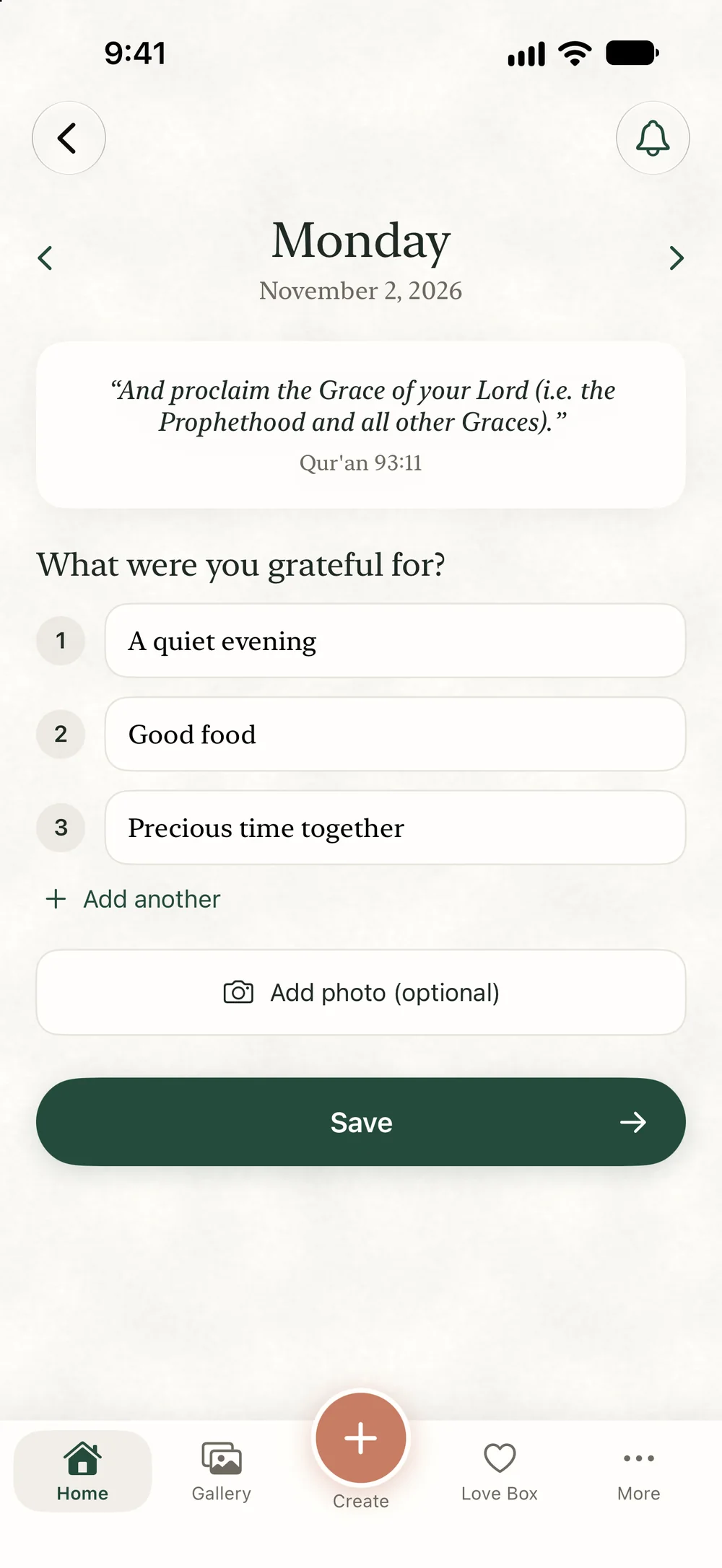
Start tonight
Recite Surah al-Ikhlas, al-Falaq and an-Nas before you sleep, teach your children the Prophet’s dua, and write down one thing you thanked Allah for today.
Create your first illustration in Ni’mahFrequently asked questions
- What is the dua for the evil eye?
- Recite Surah al-Falaq and Surah an-Nas. The Prophet ﷺ also sought refuge for his grandsons with “Aʿūdhu bi-kalimāti llāhi t-tāmmati min kulli shayṭānin wa hāmmah, wa min kulli ʿaynin lāmmah” (Bukhari 3371).
- Which dua protects children from the evil eye?
- The Prophet ﷺ said the words of Bukhari 3371 for al-Hasan and al-Husayn: “I seek refuge in the perfect words of Allah from every devil and every harmful creature, and from every evil eye.”
- Is the evil eye mentioned in hadith?
- Yes. The Prophet ﷺ said that the influence of the evil eye is a fact (in meaning, Muslim 2188), and he ordered ruqyah against it (in meaning, Bukhari 5738).
- When should I recite these duas?
- No fixed time is required. The Prophet ﷺ recited Surah al-Ikhlas, al-Falaq and an-Nas every night before sleep (Bukhari 5017).
- Does Ni’mah protect from the evil eye?
- No, the app does not promise that. Ni’mah draws illustrations without recognizable faces; a Muslim seeks protection with Allah.
Sources
- Surah al-Falaq, Saheeh International (quran.com)
- Surah an-Nas, Saheeh International (quran.com)
- Surah al-Qalam 68:51, Saheeh International (quran.com)
- Surah al-Kahf 18:39, Saheeh International (quran.com)
- Bukhari, no. 3371 (sunnah.com)
- Bukhari, no. 5017 (sunnah.com)
- Bukhari, no. 5738 (sunnah.com)
- Muslim, no. 2186 (sunnah.com)
- Muslim, no. 2188 (sunnah.com)
Read also
Related guides
- Duas for Protection in Islam: Morning, Evening and Before Sleep
Duas for protection from the Quran and Sunnah in Arabic with transliteration and meaning: Ayat al-Kursi, the three Quls and the Prophet’s ﷺ daily adhkar.
- Evil Eye (Ayn) and Hasad: What Is the Difference?
Evil eye (ayn) and hasad (envy) are related but not the same. What each means in Islam, what the Quran and hadith say, and how to seek protection.
- Hasad (Envy) in Islam: Meaning, Protection and What to Do About It
What hasad means in Islam, what the Quran and hadith say about envy, how to protect yourself from an envier and what to do when you feel envy yourself.
- Protection from Shaytan: What the Quran and Sunnah Teach
How to seek protection from Shaytan: the isti‘adhah, Ayat al-Kursi, Surah al-Baqarah at home and the Prophet’s ﷺ duas, with Arabic, meaning and sources.
About the author
Mustafa Ali
Mustafa Ali lives in Medina, the City of the Prophet ﷺ, where he studies Islamic sciences. He built Ni’mah as an Islamic photo app that shows no faces, so families can keep their memories without exposing them to the evil eye and envy.