Duas for Protection in Islam: Morning, Evening and Before Sleep
By Mustafa Ali
In short
The Prophet ﷺ taught a small set of words for protection: Surah al-Ikhlas, al-Falaq and an-Nas three times in the morning and evening, Ayat al-Kursi before sleep, and “Bismi llāhi lladhī lā yaḍurru ma‘a smihī shay’” three times. Each one is below with Arabic, transliteration, meaning and source.
For daily protection, the Sunnah teaches to recite Surah al-Ikhlas, Surah al-Falaq and Surah an-Nas three times every morning and evening; the Prophet ﷺ said they suffice you against everything (Abu Dawud 5082). Before sleep, recite Ayat al-Kursi (Bukhari 5010) and the last two verses of Surah al-Baqarah (Bukhari 5009). Morning and evening, say three times: “Bismi llāhi lladhī lā yaḍurru ma‘a smihī shay’un fī l-arḍi wa lā fī s-samā’” (Abu Dawud 5088).
Get Ni’mah on the App Store
Which duas protect, and when do you say them?
| When | What to recite | Source |
|---|---|---|
| Morning and evening | Surah al-Ikhlas, al-Falaq and an-Nas, three times each | Abu Dawud 5082 |
| Morning and evening | Bismi llāhi lladhī lā yaḍurru …, three times | Abu Dawud 5088 |
| In the evening and wherever you stop | A‘ūdhu bi-kalimāti llāhi t-tāmmāti … | Muslim 2708, 2709 |
| Before sleep | Ayat al-Kursi | Bukhari 5010 |
| At night | The last two verses of Surah al-Baqarah | Bukhari 5009 |
| Before sleep | The three Quls, blowing into the hands and wiping over the body | Bukhari 5017 |
| For your children | A‘ūdhu bi-kalimāti llāhi t-tāmmati min kulli shayṭān … | Bukhari 3371 |
| When you leave home | Bismi llāh, tawakkaltu ‘alā llāh … | Abu Dawud 5095 |
Morning and evening: the three Quls
‘Abdullah ibn Khubayb reports that the Prophet ﷺ told him to recite these three surahs three times in the morning and in the evening.
The Prophet ﷺ said: recite “Say, He is Allah, the One” and the two surahs of refuge three times in the morning and in the evening; they will suffice you against everything.
قُلْ هُوَ ٱللَّهُ أَحَدٌ ﴿١﴾ ٱللَّهُ ٱلصَّمَدُ ﴿٢﴾ لَمْ يَلِدْ وَلَمْ يُولَدْ ﴿٣﴾ وَلَمْ يَكُن لَّهُۥ كُفُوًا أَحَدٌۢ ﴿٤﴾
Qul huwa llāhu aḥad. Allāhu ṣ-ṣamad. Lam yalid wa lam yūlad. Wa lam yakun lahū kufuwan aḥad.
Say, "He is Allāh, [who is] One, Allāh, the Eternal Refuge. He neither begets nor is born, Nor is there to Him any equivalent."
قُلْ أَعُوذُ بِرَبِّ ٱلْفَلَقِ ﴿١﴾ مِن شَرِّ مَا خَلَقَ ﴿٢﴾ وَمِن شَرِّ غَاسِقٍ إِذَا وَقَبَ ﴿٣﴾ وَمِن شَرِّ ٱلنَّفَّـٰثَـٰتِ فِى ٱلْعُقَدِ ﴿٤﴾ وَمِن شَرِّ حَاسِدٍ إِذَا حَسَدَ ﴿٥﴾
Qul a‘ūdhu bi-rabbi l-falaq. Min sharri mā khalaq. Wa min sharri ghāsiqin idhā waqab. Wa min sharri n-naffāthāti fī l-‘uqad. Wa min sharri ḥāsidin idhā ḥasad.
Say, "I seek refuge in the Lord of daybreak From the evil of that which He created And from the evil of darkness when it settles And from the evil of the blowers in knots And from the evil of an envier when he envies."
قُلْ أَعُوذُ بِرَبِّ ٱلنَّاسِ ﴿١﴾ مَلِكِ ٱلنَّاسِ ﴿٢﴾ إِلَـٰهِ ٱلنَّاسِ ﴿٣﴾ مِن شَرِّ ٱلْوَسْوَاسِ ٱلْخَنَّاسِ ﴿٤﴾ ٱلَّذِى يُوَسْوِسُ فِى صُدُورِ ٱلنَّاسِ ﴿٥﴾ مِنَ ٱلْجِنَّةِ وَٱلنَّاسِ ﴿٦﴾
Qul a‘ūdhu bi-rabbi n-nās. Maliki n-nās. Ilāhi n-nās. Min sharri l-waswāsi l-khannās. Alladhī yuwaswisu fī ṣudūri n-nās. Mina l-jinnati wa n-nās.
Say, "I seek refuge in the Lord of mankind, The Sovereign of mankind, The God of mankind, From the evil of the retreating whisperer - Who whispers [evil] into the breasts of mankind - From among the jinn and mankind".
Morning and evening: “In the name of Allah, with whose name nothing can harm”
‘Uthman ibn ‘Affan reports that the Prophet ﷺ said: whoever says these words three times in the evening will not be struck by a sudden affliction until morning, and whoever says them in the morning will not be struck by one until evening.
بِسْمِ اللَّهِ الَّذِي لاَ يَضُرُّ مَعَ اسْمِهِ شَىْءٌ فِي الأَرْضِ وَلاَ فِي السَّمَاءِ وَهُوَ السَّمِيعُ الْعَلِيمُ
Bismi llāhi lladhī lā yaḍurru ma‘a smihī shay’un fī l-arḍi wa lā fī s-samā’i wa huwa s-samī‘u l-‘alīm.
In the name of Allah, with whose name nothing on earth or in heaven can cause harm, and He is the All-Hearing, the All-Knowing.
In the evening and wherever you stop
The Prophet ﷺ taught these words for anyone who stops at a place; nothing will harm him until he moves on (Muslim 2708). A man who had been stung by a scorpion was told that, had he said them in the evening, it would not have harmed him (Muslim 2709).
أَعُوذُ بِكَلِمَاتِ اللَّهِ التَّامَّاتِ مِنْ شَرِّ مَا خَلَقَ
A‘ūdhu bi-kalimāti llāhi t-tāmmāti min sharri mā khalaq.
I seek refuge in the perfect words of Allah from the evil of what He has created.
Before sleep: Ayat al-Kursi
Abu Hurayrah was told: when you go to your bed, recite Ayat al-Kursi; a guardian from Allah will stay with you and no devil will come near you until morning. The Prophet ﷺ confirmed that this was true.
ٱللَّهُ لَآ إِلَـٰهَ إِلَّا هُوَ ٱلْحَىُّ ٱلْقَيُّومُ ۚ لَا تَأْخُذُهُۥ سِنَةٌ وَلَا نَوْمٌ ۚ لَّهُۥ مَا فِى ٱلسَّمَـٰوَٰتِ وَمَا فِى ٱلْأَرْضِ ۗ مَن ذَا ٱلَّذِى يَشْفَعُ عِندَهُۥٓ إِلَّا بِإِذْنِهِۦ ۚ يَعْلَمُ مَا بَيْنَ أَيْدِيهِمْ وَمَا خَلْفَهُمْ ۖ وَلَا يُحِيطُونَ بِشَىْءٍ مِّنْ عِلْمِهِۦٓ إِلَّا بِمَا شَآءَ ۚ وَسِعَ كُرْسِيُّهُ ٱلسَّمَـٰوَٰتِ وَٱلْأَرْضَ ۖ وَلَا يَـُٔودُهُۥ حِفْظُهُمَا ۚ وَهُوَ ٱلْعَلِىُّ ٱلْعَظِيمُ ﴿٢٥٥﴾
Allāhu lā ilāha illā huwa l-ḥayyu l-qayyūm. Lā ta’khudhuhū sinatun wa lā nawm. Lahū mā fī s-samāwāti wa mā fī l-arḍ. Man dhā lladhī yashfa‘u ‘indahū illā bi-idhnih. Ya‘lamu mā bayna aydīhim wa mā khalfahum, wa lā yuḥīṭūna bi-shay’in min ‘ilmihī illā bi-mā shā’. Wasi‘a kursiyyuhu s-samāwāti wa l-arḍ, wa lā ya’ūduhū ḥifẓuhumā, wa huwa l-‘aliyyu l-‘aẓīm.
Allāh - there is no deity except Him, the Ever-Living, the Self-Sustaining. Neither drowsiness overtakes Him nor sleep. To Him belongs whatever is in the heavens and whatever is on the earth. Who is it that can intercede with Him except by His permission? He knows what is [presently] before them and what will be after them, and they encompass not a thing of His knowledge except for what He wills. His Kursī extends over the heavens and the earth, and their preservation tires Him not. And He is the Most High, the Most Great.
At night: the last two verses of Surah al-Baqarah
The Prophet ﷺ said that whoever recites the last two verses of Surah al-Baqarah at night, they will suffice him.
The Messenger has believed in what was revealed to him from his Lord, and [so have] the believers. All of them have believed in Allāh and His angels and His books and His messengers, [saying], "We make no distinction between any of His messengers." And they say, "We hear and we obey. [We seek] Your forgiveness, our Lord, and to You is the [final] destination." Allāh does not charge a soul except [with that within] its capacity. It will have [the consequence of] what [good] it has gained, and it will bear [the consequence of] what [evil] it has earned. "Our Lord, do not impose blame upon us if we have forgotten or erred. Our Lord, and lay not upon us a burden like that which You laid upon those before us. Our Lord, and burden us not with that which we have no ability to bear. And pardon us; and forgive us; and have mercy upon us. You are our protector, so give us victory over the disbelieving people."
‘A’ishah reports that every night when the Prophet ﷺ went to bed, he cupped his hands, recited Surah al-Ikhlas, al-Falaq and an-Nas, blew into them and wiped them over as much of his body as he could, beginning with his head and face. He did this three times.
For your children
Ibn ‘Abbas reports that the Prophet ﷺ sought refuge for his grandsons al-Hasan and al-Husayn with these words, and said that Ibrahim used to do the same for Isma‘il and Ishaq.
أَعُوذُ بِكَلِمَاتِ اللَّهِ التَّامَّةِ مِنْ كُلِّ شَيْطَانٍ وَهَامَّةٍ، وَمِنْ كُلِّ عَيْنٍ لاَمَّةٍ
A‘ūdhu bi-kalimāti llāhi t-tāmmati min kulli shayṭānin wa hāmmah, wa min kulli ‘aynin lāmmah.
I seek refuge in the perfect words of Allah from every devil and every harmful creature, and from every evil eye.
When you leave home
The Prophet ﷺ said that whoever says this on leaving his house is told: you are guided, sufficed and protected, and the devils move away from him.
بِسْمِ اللَّهِ تَوَكَّلْتُ عَلَى اللَّهِ لاَ حَوْلَ وَلاَ قُوَّةَ إِلاَّ بِاللَّهِ
Bismi llāh, tawakkaltu ‘alā llāh, lā ḥawla wa lā quwwata illā bi-llāh.
In the name of Allah, I place my trust in Allah; there is no might and no power except with Allah.
How to make it a habit
Tie it to a prayer.
Say the morning words after Fajr and the evening words after ‘Asr or Maghrib.
Start with the three Quls.
They take about a minute. Add the other duas one by one once these are a habit.
Recite with your children.
Say the words aloud at bedtime so that they learn them by hearing.
End the day with thanks.
After your evening adhkar, write down one blessing of the day.
This page gives no religious rulings; it passes on what the sources say. Protection and healing come from Allah, and no dua is a guarantee of a particular outcome. If you have a specific question, ask a qualified scholar.
After the adhkar: one line of thanks
Seeking refuge and giving thanks belong together: you ask Allah to protect what He has given you, and you thank Him for it. Ni’mah is a gratitude journal for Muslims on iPhone that we built. It asks you every day what you are grateful for and reminds you in the evening.
A photo can become an illustration in which no one has a recognisable face, so you can keep a family moment and share it without showing who is in it. The app does not promise protection; it simply shows no faces.
Without a subscription you get the gratitude journal, reminders, Love Notes and 1 illustration per month. Ni’mah Pro gives you a larger illustration allowance.
Ni’mah is our own app.
Get Ni’mah on the App Store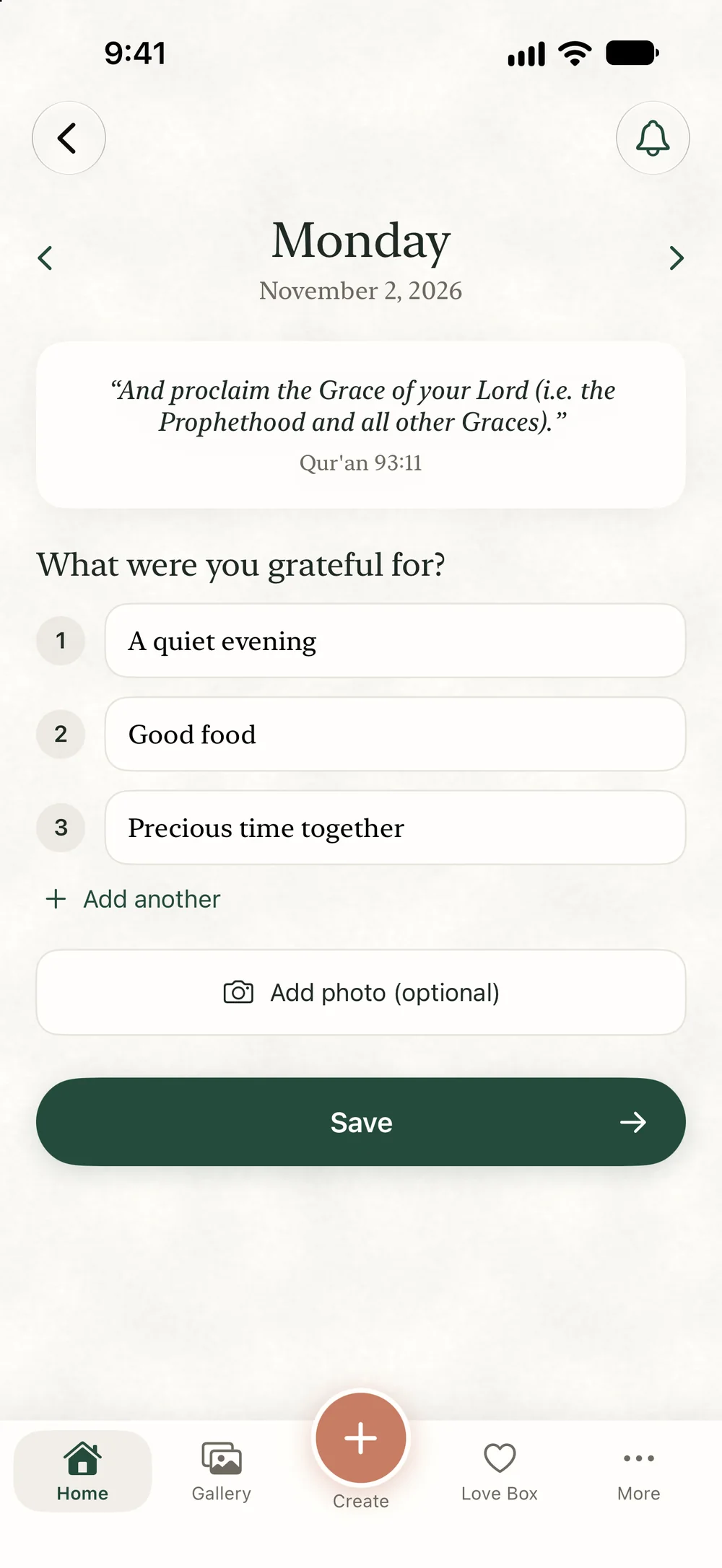
All guides on this topic
- Evil Eye (Ayn) and Hasad: What Is the Difference?
Evil eye (ayn) and hasad (envy) are related but not the same. What each means in Islam, what the Quran and hadith say, and how to seek protection.
- Hasad (Envy) in Islam: Meaning, Protection and What to Do About It
What hasad means in Islam, what the Quran and hadith say about envy, how to protect yourself from an envier and what to do when you feel envy yourself.
- Protection from Shaytan: What the Quran and Sunnah Teach
How to seek protection from Shaytan: the isti‘adhah, Ayat al-Kursi, Surah al-Baqarah at home and the Prophet’s ﷺ duas, with Arabic, meaning and sources.
- Dua for Evil Eye: Arabic Text, Transliteration and Meaning
Dua for protection from the evil eye in Arabic with transliteration and meaning: Surah al-Falaq, Surah an-Nas and two duas from Bukhari and Muslim.
Start tonight
Recite Ayat al-Kursi and the three Quls before you sleep, say the Prophet’s ﷺ dua over your children, and write down one blessing you thanked Allah for today.
Start your gratitude journal in Ni’mahFrequently asked questions
- What is the most powerful dua for protection?
- The sources do not rank them, but the Prophet ﷺ said about Surah al-Ikhlas, al-Falaq and an-Nas, recited three times morning and evening, that they suffice you against everything (Abu Dawud 5082). Ayat al-Kursi before sleep is reported in Bukhari 5010.
- When do I say the morning and evening adhkar?
- The morning words are commonly said between Fajr and sunrise and the evening words between ‘Asr and Maghrib. If you miss the time, say them when you remember.
- Can I recite these duas for my children?
- Yes. The Prophet ﷺ sought refuge for his grandsons with “A‘ūdhu bi-kalimāti llāhi t-tāmmati min kulli shayṭānin wa hāmmah, wa min kulli ‘aynin lāmmah” (Bukhari 3371).
- Do I have to say the duas in Arabic?
- The surahs and the Prophet’s ﷺ duas are recited in their Arabic wording. The transliteration helps you read them until you know them, and the meaning helps you say them with attention. A personal dua in your own words can be made in any language.
- Does a dua guarantee that nothing will happen to me?
- No. A dua is an act of worship and a means; protection comes from Allah alone. Muslims recite these words, take sensible precautions and trust Allah with the outcome.
Sources
- Surah al-Baqarah 2:255, Saheeh International (quran.com)
- Surah al-Baqarah 2:285–286, Saheeh International (quran.com)
- Surah al-Ikhlas 112, Saheeh International (quran.com)
- Surah al-Falaq 113, Saheeh International (quran.com)
- Surah an-Nas 114, Saheeh International (quran.com)
- Sahih al-Bukhari, no. 5010 (sunnah.com)
- Sahih al-Bukhari, no. 5009 (sunnah.com)
- Sahih al-Bukhari, no. 5017 (sunnah.com)
- Sahih al-Bukhari, no. 3371 (sunnah.com)
- Sahih Muslim, no. 2708 (sunnah.com)
- Sahih Muslim, no. 2709 (sunnah.com)
- Sunan Abi Dawud, no. 5082 (sunnah.com)
- Sunan Abi Dawud, no. 5088 (sunnah.com)
- Sunan Abi Dawud, no. 5095 (sunnah.com)
Read also
About the author
Mustafa Ali
Mustafa Ali lives in Medina, the City of the Prophet ﷺ, where he studies Islamic sciences. He built Ni’mah as an Islamic photo app that shows no faces, so families can keep their memories without exposing them to the evil eye and envy.