Protection from Shaytan: What the Quran and Sunnah Teach
By Mustafa Ali
In short
The Quran tells you what to do when Shaytan whispers: seek refuge with Allah (7:200). Say “A‘ūdhu bi-llāhi mina sh-shayṭāni r-rajīm”, recite Ayat al-Kursi before sleep, mention Allah’s name when you enter your home and eat, and recite Surah al-Baqarah in your house. The sources for each are below.
To seek protection from Shaytan, the Quran tells you to seek refuge with Allah: “A‘ūdhu bi-llāhi mina sh-shayṭāni r-rajīm” (Quran 7:200, 16:98). The Sunnah adds Ayat al-Kursi before sleep (Bukhari 5010), mentioning Allah’s name when you enter your home and eat (Muslim 2018), reciting Surah al-Baqarah in your house (Muslim 780) and saying “Lā ilāha illā llāhu waḥdahū lā sharīka lah …” a hundred times a day (Bukhari 3293).
Get Ni’mah on the App Store
What does the Quran say about Shaytan?
The Quran calls Shaytan a clear enemy and tells believers to treat him as one:
Indeed, Satan is an enemy to you; so take him as an enemy. He only invites his party to be among the companions of the Blaze.
It also limits his power. He whispers and invites; he has no authority over those who rely on their Lord:
So when you recite the Qur’ān, [first] seek refuge in Allāh from Satan, the expelled [from His mercy]. Indeed, there is for him no authority over those who have believed and rely upon their Lord.
The first step: seek refuge with Allah
And if an evil suggestion comes to you from Satan, then seek refuge in Allāh. Indeed, He is Hearing and Knowing.
The words for this are called the isti‘adhah. Sulayman ibn Surad reports that two men insulted each other in front of the Prophet ﷺ and one of them grew red with anger. The Prophet ﷺ said he knew words that would take his anger away:
أَعُوذُ بِاللَّهِ مِنَ الشَّيْطَانِ الرَّجِيمِ
A‘ūdhu bi-llāhi mina sh-shayṭāni r-rajīm.
I seek refuge with Allah from Satan, the accursed.
The Quran also teaches a dua against the promptings of the devils:
وَقُل رَّبِّ أَعُوذُ بِكَ مِنْ هَمَزَٰتِ ٱلشَّيَـٰطِينِ ﴿٩٧﴾ وَأَعُوذُ بِكَ رَبِّ أَن يَحْضُرُونِ ﴿٩٨﴾
Rabbi a‘ūdhu bika min hamazāti sh-shayāṭīn, wa a‘ūdhu bika rabbi an yaḥḍurūn.
And say, "My Lord, I seek refuge in You from the incitements of the devils, And I seek refuge in You, my Lord, lest they be present with me."
Before sleep: Ayat al-Kursi
Abu Hurayrah was told: when you go to your bed, recite Ayat al-Kursi; a guardian from Allah will stay with you and no devil will come near you until morning. The Prophet ﷺ confirmed that this was true.
ٱللَّهُ لَآ إِلَـٰهَ إِلَّا هُوَ ٱلْحَىُّ ٱلْقَيُّومُ ۚ لَا تَأْخُذُهُۥ سِنَةٌ وَلَا نَوْمٌ ۚ لَّهُۥ مَا فِى ٱلسَّمَـٰوَٰتِ وَمَا فِى ٱلْأَرْضِ ۗ مَن ذَا ٱلَّذِى يَشْفَعُ عِندَهُۥٓ إِلَّا بِإِذْنِهِۦ ۚ يَعْلَمُ مَا بَيْنَ أَيْدِيهِمْ وَمَا خَلْفَهُمْ ۖ وَلَا يُحِيطُونَ بِشَىْءٍ مِّنْ عِلْمِهِۦٓ إِلَّا بِمَا شَآءَ ۚ وَسِعَ كُرْسِيُّهُ ٱلسَّمَـٰوَٰتِ وَٱلْأَرْضَ ۖ وَلَا يَـُٔودُهُۥ حِفْظُهُمَا ۚ وَهُوَ ٱلْعَلِىُّ ٱلْعَظِيمُ ﴿٢٥٥﴾
Allāhu lā ilāha illā huwa l-ḥayyu l-qayyūm. Lā ta’khudhuhū sinatun wa lā nawm. Lahū mā fī s-samāwāti wa mā fī l-arḍ. Man dhā lladhī yashfa‘u ‘indahū illā bi-idhnih. Ya‘lamu mā bayna aydīhim wa mā khalfahum, wa lā yuḥīṭūna bi-shay’in min ‘ilmihī illā bi-mā shā’. Wasi‘a kursiyyuhu s-samāwāti wa l-arḍ, wa lā ya’ūduhū ḥifẓuhumā, wa huwa l-‘aliyyu l-‘aẓīm.
Allāh - there is no deity except Him, the Ever-Living, the Self-Sustaining. Neither drowsiness overtakes Him nor sleep. To Him belongs whatever is in the heavens and whatever is on the earth. Who is it that can intercede with Him except by His permission? He knows what is [presently] before them and what will be after them, and they encompass not a thing of His knowledge except for what He wills. His Kursī extends over the heavens and the earth, and their preservation tires Him not. And He is the Most High, the Most Great.
At home: Allah’s name and Surah al-Baqarah
The Prophet ﷺ said: when a man enters his house and mentions Allah’s name on entering and when he eats, Shaytan says to his companions: there is no place for you to spend the night here and no evening meal.
The Prophet ﷺ said: do not turn your houses into graveyards. Shaytan flees from the house in which Surah al-Baqarah is recited.
When you leave your house, say:
بِسْمِ اللَّهِ تَوَكَّلْتُ عَلَى اللَّهِ لاَ حَوْلَ وَلاَ قُوَّةَ إِلاَّ بِاللَّهِ
Bismi llāh, tawakkaltu ‘alā llāh, lā ḥawla wa lā quwwata illā bi-llāh.
In the name of Allah, I place my trust in Allah; there is no might and no power except with Allah.
Every day: a hundred times
The Prophet ﷺ said that whoever says these words a hundred times in a day has, among other rewards, a protection from Shaytan for that day until evening.
لاَ إِلَهَ إِلاَّ اللَّهُ وَحْدَهُ لاَ شَرِيكَ لَهُ، لَهُ الْمُلْكُ، وَلَهُ الْحَمْدُ، وَهُوَ عَلَى كُلِّ شَىْءٍ قَدِيرٌ
Lā ilāha illā llāhu waḥdahū lā sharīka lah, lahu l-mulku wa lahu l-ḥamd, wa huwa ‘alā kulli shay’in qadīr.
There is no god but Allah alone, He has no partner. His is the dominion and His is the praise, and He has power over all things.
When whispers come in prayer or in your thoughts
‘Uthman ibn Abi l-‘As complained that Shaytan came between him and his prayer and his recitation. The Prophet ﷺ told him: when you notice him, seek refuge with Allah from him and spit lightly to your left three times. He did so and Allah took it away from him.
The Prophet ﷺ said that Shaytan comes to a person and asks who created this and that, until he asks who created your Lord. When it reaches this point, seek refuge with Allah and stop.
If intrusive thoughts weigh on you for a long time, speak to a scholar you trust and, where needed, to a doctor. Seeking help is not a lack of faith.
Overview
| Situation | What to do | Source |
|---|---|---|
| A whisper or temptation | A‘ūdhu bi-llāhi mina sh-shayṭāni r-rajīm | Quran 7:200 |
| Anger | Seek refuge with Allah | Muslim 2610 |
| Before sleep | Ayat al-Kursi | Bukhari 5010 |
| Entering the house and eating | Mention Allah’s name | Muslim 2018 |
| At home | Recite Surah al-Baqarah | Muslim 780 |
| Leaving the house | Bismi llāh, tawakkaltu ‘alā llāh … | Abu Dawud 5095 |
| Every day | Lā ilāha illā llāhu waḥdahū … a hundred times | Bukhari 3293 |
| Whispers in prayer | Seek refuge and spit lightly to the left three times | Muslim 2203 |
This page gives no religious rulings; it passes on what the sources say. Protection and healing come from Allah, and no dua is a guarantee of a particular outcome. If you have a specific question, ask a qualified scholar.
Remembrance and thanks, every day
The Quran links remembrance with gratitude: “So remember Me; I will remember you. And be grateful to Me” (2:152). Ni’mah is a gratitude journal for Muslims on iPhone that we built. It asks you every day what you are grateful for, shows a verse on gratitude with your entry and reminds you in the evening.
Your entries stay on your device. The app does not promise protection from anything; it helps you notice and remember what Allah has given you.
Without a subscription you get the gratitude journal, reminders, Love Notes and 1 illustration per month. Ni’mah Pro gives you a larger illustration allowance.
Ni’mah is our own app.
Get Ni’mah on the App Store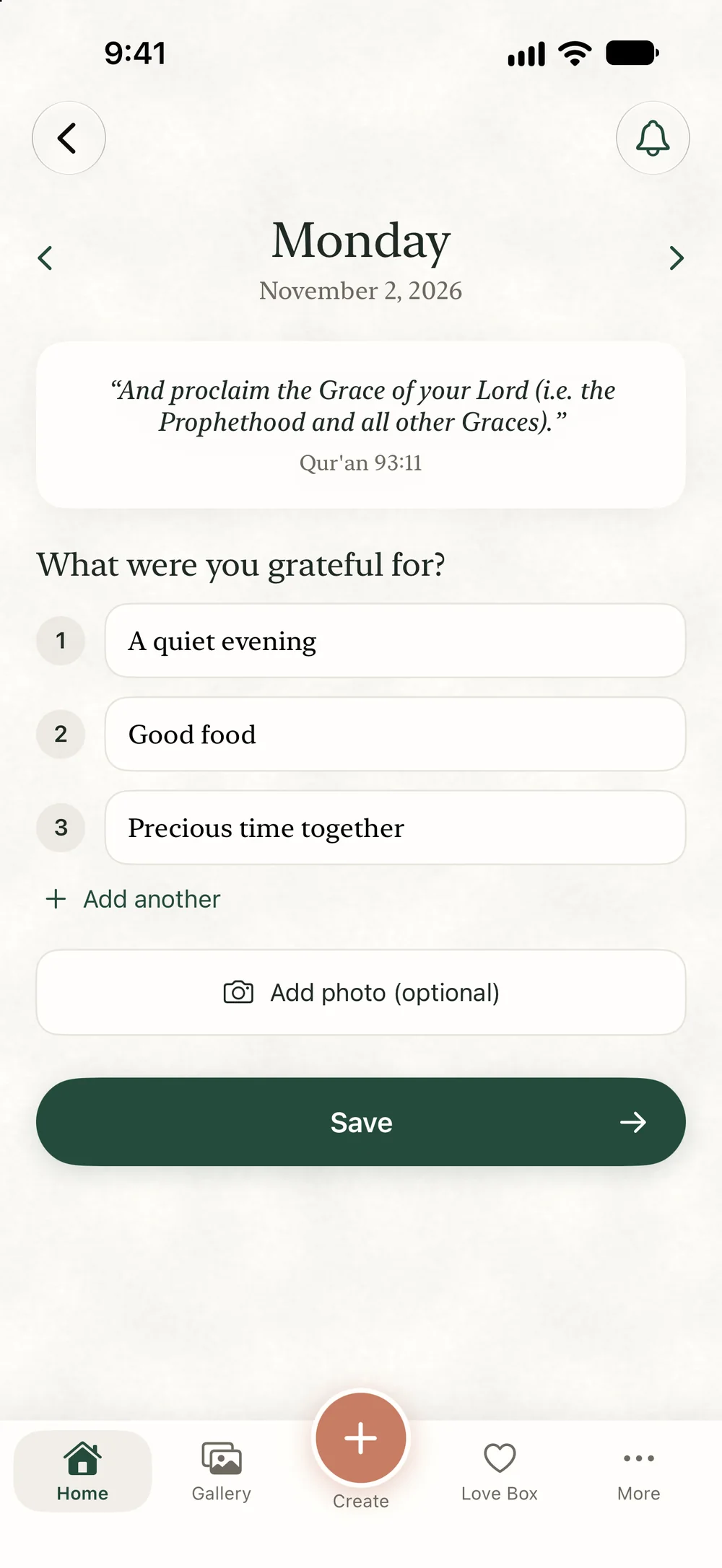
Start with one habit
Tonight, recite Ayat al-Kursi before you sleep. Tomorrow, mention Allah’s name when you enter your home. Then write down one thing you thanked Allah for.
Start your gratitude journal in Ni’mahFrequently asked questions
- What is the dua for protection from Shaytan?
- The basic words are “A‘ūdhu bi-llāhi mina sh-shayṭāni r-rajīm” (I seek refuge with Allah from Satan, the accursed), as the Quran instructs in 7:200. The Quran also teaches: “Rabbi a‘ūdhu bika min hamazāti sh-shayāṭīn” (23:97–98).
- Which surah protects the house from Shaytan?
- The Prophet ﷺ said that Shaytan flees from the house in which Surah al-Baqarah is recited (Muslim 780).
- What should I recite before sleep?
- Ayat al-Kursi (Bukhari 5010), the last two verses of Surah al-Baqarah (Bukhari 5009) and Surah al-Ikhlas, al-Falaq and an-Nas (Bukhari 5017).
- What do I do when Shaytan whispers during prayer?
- The Prophet ﷺ told ‘Uthman ibn Abi l-‘As to seek refuge with Allah and spit lightly to his left three times (Muslim 2203).
- Does Shaytan have power over a believer?
- The Quran says he has no authority over those who believe and rely on their Lord (16:99). He whispers; the decision remains with the person.
Sources
- Surah Fatir 35:6, Saheeh International (quran.com)
- Surah an-Nahl 16:98–99, Saheeh International (quran.com)
- Surah al-A‘raf 7:200, Saheeh International (quran.com)
- Surah al-Mu’minun 23:97–98, Saheeh International (quran.com)
- Surah al-Baqarah 2:255, Saheeh International (quran.com)
- Sahih al-Bukhari, no. 5010 (sunnah.com)
- Sahih al-Bukhari, no. 3293 (sunnah.com)
- Sahih al-Bukhari, no. 3276 (sunnah.com)
- Sahih Muslim, no. 2610 (sunnah.com)
- Sahih Muslim, no. 2018 (sunnah.com)
- Sahih Muslim, no. 780 (sunnah.com)
- Sahih Muslim, no. 2203 (sunnah.com)
- Sunan Abi Dawud, no. 5095 (sunnah.com)
Read also
Related guides
- Duas for Protection in Islam: Morning, Evening and Before Sleep
Duas for protection from the Quran and Sunnah in Arabic with transliteration and meaning: Ayat al-Kursi, the three Quls and the Prophet’s ﷺ daily adhkar.
- Evil Eye (Ayn) and Hasad: What Is the Difference?
Evil eye (ayn) and hasad (envy) are related but not the same. What each means in Islam, what the Quran and hadith say, and how to seek protection.
- Hasad (Envy) in Islam: Meaning, Protection and What to Do About It
What hasad means in Islam, what the Quran and hadith say about envy, how to protect yourself from an envier and what to do when you feel envy yourself.
- Dua for Evil Eye: Arabic Text, Transliteration and Meaning
Dua for protection from the evil eye in Arabic with transliteration and meaning: Surah al-Falaq, Surah an-Nas and two duas from Bukhari and Muslim.
About the author
Mustafa Ali
Mustafa Ali lives in Medina, the City of the Prophet ﷺ, where he studies Islamic sciences. He built Ni’mah as an Islamic photo app that shows no faces, so families can keep their memories without exposing them to the evil eye and envy.