Hasad (Envy) in Islam: Meaning, Protection and What to Do About It
By Mustafa Ali
In short
Hasad is wishing that a blessing leaves someone else. The Quran teaches you to seek refuge “from the evil of an envier when he envies” (113:5), and the Prophet ﷺ said: do not envy one another (Bukhari 6065). Protect yourself with Surah al-Falaq and an-Nas; if you feel envy yourself, pray for blessing for the other person.
Hasad means envy: disliking a blessing Allah has given someone else and wishing it would leave them. The Prophet ﷺ forbade it: “Do not hate one another and do not envy one another” (Bukhari 6065). For protection, the Quran teaches Surah al-Falaq, which ends with seeking refuge “from the evil of an envier when he envies” (113:5). If you feel envy yourself, the Sunnah is to pray for blessing for the other person (Ibn Majah 3509).
Get Ni’mah on the App Store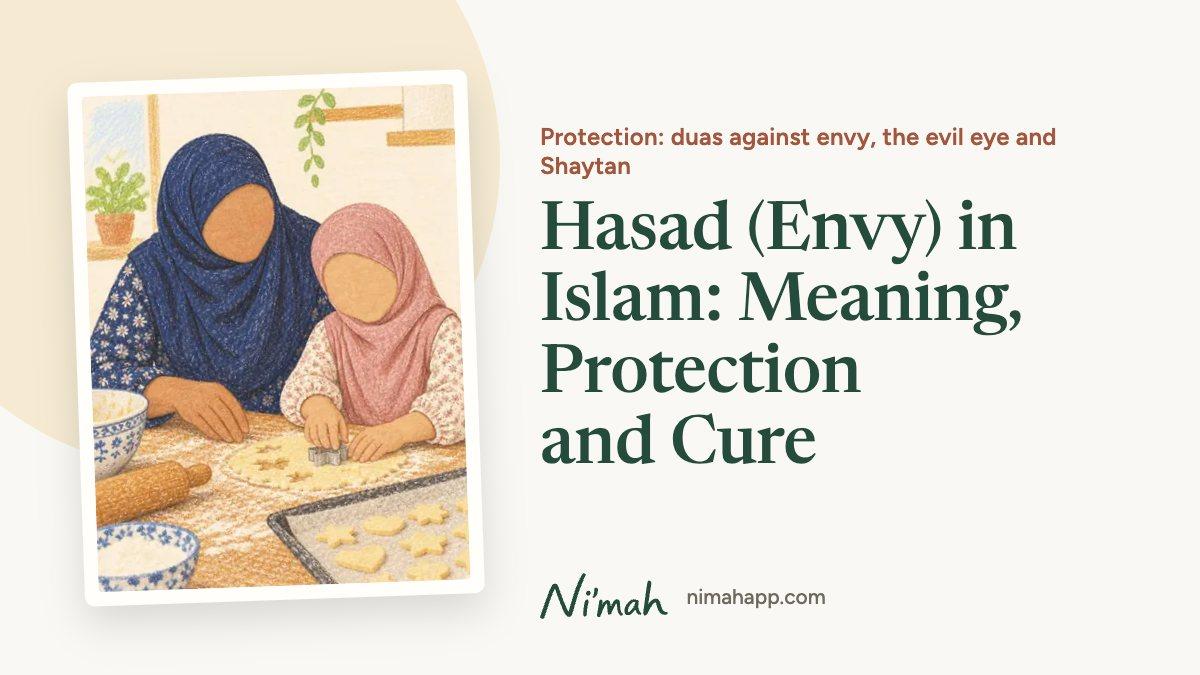
What does hasad mean?
Hasad (حسد) is the Arabic word for envy. Scholars describe it as disliking that someone has a blessing and wishing that it be taken from them. It is different from simply wanting something good for yourself as well.
That second feeling is called ghibtah: you wish for the same good without wanting the other person to lose it. The Prophet ﷺ named two cases in which this is praiseworthy:
The Prophet ﷺ said there is no envy except in two cases: a person whom Allah has given wealth and who spends it rightly, and a person whom Allah has given wisdom and who acts by it and teaches it.
What the Quran says about envy
Or do they envy people for what Allāh has given them of His bounty? But We had already given the family of Abraham the Scripture and wisdom and conferred upon them a great kingdom.
The Quran also tells believers not to long for what Allah has given to others, and to ask Him directly instead:
And do not wish for that by which Allāh has made some of you exceed others. For men is a share of what they have earned, and for women is a share of what they have earned. And ask Allāh of His bounty. Indeed Allāh is ever, of all things, Knowing.
And it teaches a dua for a heart free of resentment towards other believers:
And [there is a share for] those who come after them, saying, "Our Lord, forgive us and our brothers who preceded us in faith and put not in our hearts [any] resentment toward those who have believed. Our Lord, indeed You are Kind and Merciful."
What the Prophet ﷺ said
The Prophet ﷺ said: do not hate one another, do not envy one another and do not turn away from one another; be servants of Allah as brothers.
The Prophet ﷺ said that none of you truly believes until he loves for his brother what he loves for himself.
How to seek protection from an envier
Surah al-Falaq names the envier directly. The Prophet ﷺ recited it together with Surah al-Ikhlas and Surah an-Nas every night before sleep (Bukhari 5017) and taught to recite the three surahs three times in the morning and evening (Abu Dawud 5082).
قُلْ أَعُوذُ بِرَبِّ ٱلْفَلَقِ ﴿١﴾ مِن شَرِّ مَا خَلَقَ ﴿٢﴾ وَمِن شَرِّ غَاسِقٍ إِذَا وَقَبَ ﴿٣﴾ وَمِن شَرِّ ٱلنَّفَّـٰثَـٰتِ فِى ٱلْعُقَدِ ﴿٤﴾ وَمِن شَرِّ حَاسِدٍ إِذَا حَسَدَ ﴿٥﴾
Qul a‘ūdhu bi-rabbi l-falaq. Min sharri mā khalaq. Wa min sharri ghāsiqin idhā waqab. Wa min sharri n-naffāthāti fī l-‘uqad. Wa min sharri ḥāsidin idhā ḥasad.
Say, "I seek refuge in the Lord of daybreak From the evil of that which He created And from the evil of darkness when it settles And from the evil of the blowers in knots And from the evil of an envier when he envies."
When the Prophet ﷺ was ill, Jibril recited over him words that mention the envious eye:
بِاسْمِ اللَّهِ أَرْقِيكَ مِنْ كُلِّ شَىْءٍ يُؤْذِيكَ مِنْ شَرِّ كُلِّ نَفْسٍ أَوْ عَيْنِ حَاسِدٍ اللَّهُ يَشْفِيكَ بِاسْمِ اللَّهِ أَرْقِيكَ
Bismi llāhi arqīk, min kulli shay’in yu’dhīk, min sharri kulli nafsin aw ‘ayni ḥāsid, Allāhu yashfīk, bismi llāhi arqīk.
In the name of Allah I recite over you, from everything that harms you, from the evil of every soul or envious eye. May Allah heal you. In the name of Allah I recite over you.
Ya‘qub advised his son Yusuf not to tell his brothers about his dream. Scholars cite this verse as a basis for keeping a blessing to yourself when you fear envy:
He said, "O my son, do not relate your vision to your brothers or they will contrive against you a plan. Indeed Satan, to man, is a manifest enemy.
What to do when you feel envy yourself
Notice it and do not act on it.
A feeling that you dislike and do not follow with words or deeds is different from envy you act on. Do not speak badly of the person and do not wish them harm.
Pray for blessing for the other person.
The Prophet ﷺ said that whoever sees something he likes in his brother should pray for blessing for him (Ibn Majah 3509). Say: Bārakallāhu lak.
Say Mā shā’ Allāh.
The words from Surah al-Kahf 18:39 tie every blessing back to Allah’s will.
Ask Allah for His bounty.
The Quran says: “And ask Allah of His bounty” (4:32). What He gave someone else takes nothing from what He can give you.
Count your own blessings.
Write down three things Allah gave you today. Envy looks at what others have; gratitude looks at what you were given.
When ‘Amir ibn Rabi‘ah admired how Sahl ibn Hunayf looked and Sahl fell ill, the Prophet ﷺ asked why one of them would harm his brother, and said that whoever sees something he likes in his brother should pray for blessing for him.
This page gives no religious rulings; it passes on what the sources say. Protection and healing come from Allah, and no dua is a guarantee of a particular outcome. If you have a specific question, ask a qualified scholar.
Gratitude instead of comparison
Envy grows where you compare; gratitude grows where you count. Ni’mah is a gratitude journal for Muslims on iPhone that we built. It asks you every day what you are grateful for, and your entries stay on your device.
If you worry about envy when sharing family moments, a photo can become an illustration in which no one has a recognisable face. The app does not promise protection from envy or the evil eye; it simply shows no faces.
Without a subscription you get the gratitude journal, reminders, Love Notes and 1 illustration per month. Ni’mah Pro gives you a larger illustration allowance.
Ni’mah is our own app.
Get Ni’mah on the App Store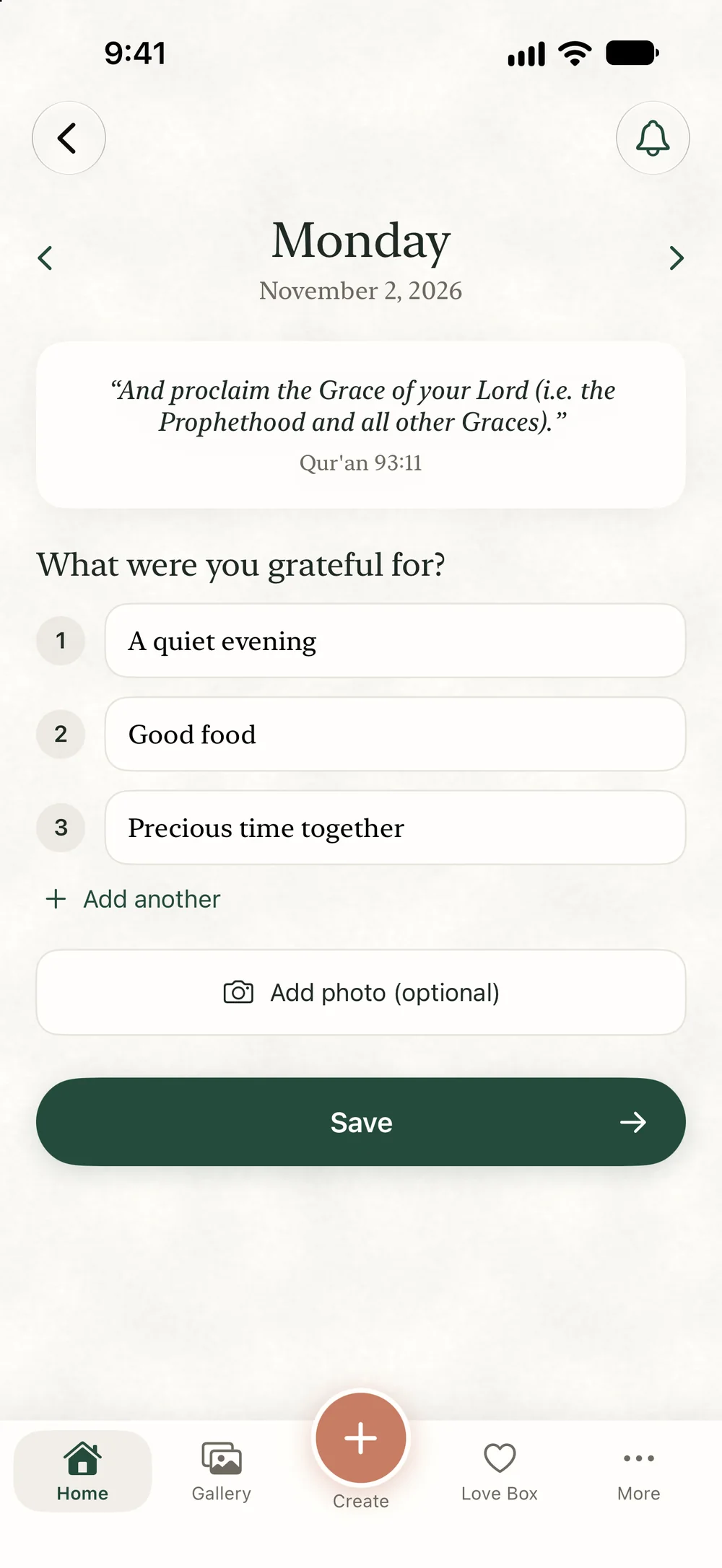
Tonight, count instead of compare
Recite Surah al-Falaq before you sleep, pray for blessing for one person you have envied, and write down three things Allah gave you today.
Start your gratitude journal in Ni’mahFrequently asked questions
- What is hasad in Islam?
- Hasad is envy: disliking a blessing that Allah has given someone and wishing it would leave them. The Prophet ﷺ said: “Do not envy one another” (Bukhari 6065).
- What is the difference between hasad and ghibtah?
- With hasad you want the other person to lose the blessing. With ghibtah you wish for the same good without wanting them to lose it. The Prophet ﷺ described this second kind in Bukhari 73.
- Which dua protects from hasad?
- Surah al-Falaq ends with seeking refuge “from the evil of an envier when he envies” (113:5). The Prophet ﷺ recited it with Surah al-Ikhlas and an-Nas every night (Bukhari 5017).
- Is feeling envy a sin?
- Scholars distinguish between a feeling that comes to you and that you dislike, and envy you act on in words or deeds. This page gives no ruling; ask a qualified scholar about your situation.
- How do I stop being envious?
- Pray for blessing for the person (Ibn Majah 3509), say Mā shā’ Allāh, ask Allah of His bounty (Quran 4:32) and make a habit of writing down your own blessings.
Sources
- Surah an-Nisa’ 4:54, Saheeh International (quran.com)
- Surah an-Nisa’ 4:32, Saheeh International (quran.com)
- Surah al-Hashr 59:10, Saheeh International (quran.com)
- Surah al-Falaq 113, Saheeh International (quran.com)
- Surah Yusuf 12:5, Saheeh International (quran.com)
- Sahih al-Bukhari, no. 73 (sunnah.com)
- Sahih al-Bukhari, no. 6065 (sunnah.com)
- Sahih al-Bukhari, no. 13 (sunnah.com)
- Sahih al-Bukhari, no. 5017 (sunnah.com)
- Sahih Muslim, no. 2186 (sunnah.com)
- Sunan Abi Dawud, no. 5082 (sunnah.com)
- Sunan Ibn Majah, no. 3509 (sunnah.com)
Read also
Related guides
- Duas for Protection in Islam: Morning, Evening and Before Sleep
Duas for protection from the Quran and Sunnah in Arabic with transliteration and meaning: Ayat al-Kursi, the three Quls and the Prophet’s ﷺ daily adhkar.
- Evil Eye (Ayn) and Hasad: What Is the Difference?
Evil eye (ayn) and hasad (envy) are related but not the same. What each means in Islam, what the Quran and hadith say, and how to seek protection.
- Protection from Shaytan: What the Quran and Sunnah Teach
How to seek protection from Shaytan: the isti‘adhah, Ayat al-Kursi, Surah al-Baqarah at home and the Prophet’s ﷺ duas, with Arabic, meaning and sources.
- Dua for Evil Eye: Arabic Text, Transliteration and Meaning
Dua for protection from the evil eye in Arabic with transliteration and meaning: Surah al-Falaq, Surah an-Nas and two duas from Bukhari and Muslim.
About the author
Mustafa Ali
Mustafa Ali lives in Medina, the City of the Prophet ﷺ, where he studies Islamic sciences. He built Ni’mah as an Islamic photo app that shows no faces, so families can keep their memories without exposing them to the evil eye and envy.